A combination of style, ‘coolness’, driving pleasure and sheer personal preference. If you have a better list or just one model you want to add the list, let me know.
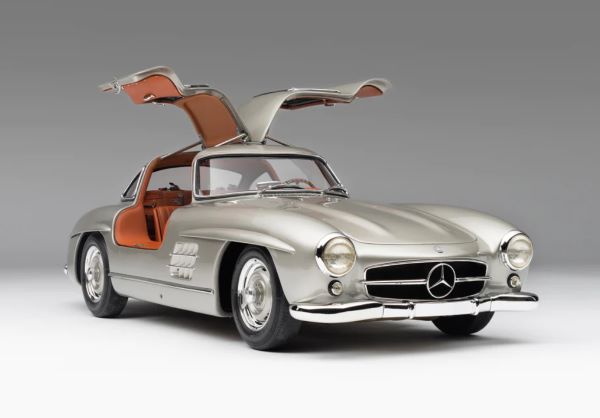
Mercedes 300SL Gullwing
Another car that’s, ‘a little before my time’. And I’ve only been in the passenger seat in the Mercedes #300SL, but in the 1950’s this was the stand out car. (If you could get out of it)
Super cool doors, a folding steering wheel so you could climb in and Stirling Moss credibility with the #300SLR variant.
Even if its performance would be easily overhauled during the next 10 years. Driving one today would still be a memorable trip.
** You may be wondering where all the modern cars are **
The list is the personal preference of our Director, Guy Winter. A car fanatic since the 1960’s, he eats’, sleeps and dreams everything Motor Trade. For the past 25 years he has worked for Cymark providing digital and telephone marketing support for individual retailers, groups and manufacturers alike.
If you want to stay on top of the latest Motor Trade chat either subscribe to this blog or find Guy on Linkedin.
A combination of style, ‘coolness’, driving pleasure and sheer personal preference. If you have a better list or just one model you want to add the list, let me know.
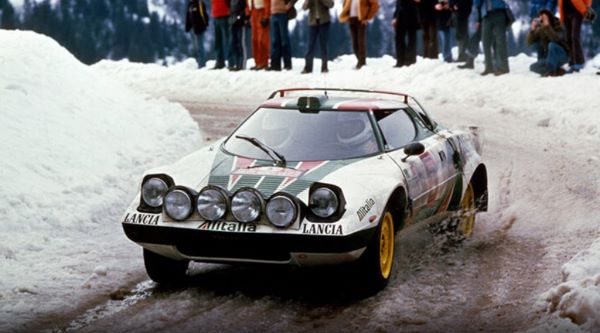
Lancia Stratos.
OK, disclosure time. I’m slightly biased towards the Stratos, my dad was one of the Lancia mechanics who worked in it during those wet and winter forest stages in the 1970’s.
The road car had stunning presence, a Ferrari engine with a great sound track and the requirement for super human driving skill to avoid spinning off into the nearest tree. Now that is cool.
The list is the personal preference of our Director, Guy Winter. A car fanatic since the 1960’s, he eats’, sleeps and dreams everything Motor Trade. For the past 25 years he has worked for Cymark providing digital and telephone marketing support for individual retailers, groups and manufacturers alike.
If you want to stay on top of the latest Motor Trade chat either subscribe to this blog or find Guy on Linkedin.
A combination of style, ‘coolness’, driving pleasure and sheer personal preference. If you have a better list or just one model you want to add the list, let me know.
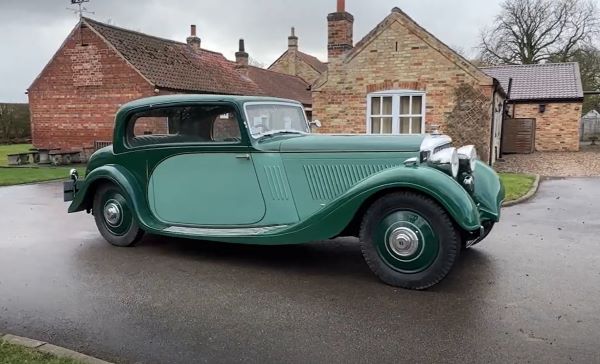
1933 Bentley. 3 1/2
A bit our of left field this one. You need to find the right model. I suggest you start with the coach built 1933 3 1/2 litre, two door coupe. Designed as a super grand tourer, with the strap line – “the silent sports car”, the car to waft the owner to the South of France at over a 90mph. (With an advertised 9mph top speed that might have been optimistic.
Few cars could touch it, perhaps an Alfa 8C or a Bugatti. But they were a little bit too raw. The Bentley said speed with style, especially coming off the back of a rack of Le Mans wins. True Style.
The list is the personal preference of our Director, Guy Winter. A car fanatic since the 1960’s, he eats’, sleeps and dreams everything Motor Trade. For the past 25 years he has worked for Cymark providing digital and telephone marketing support for individual retailers, groups and manufacturers alike.
If you want to stay on top of the latest Motor Trade chat either subscribe to this blog or find Guy on Linkedin.
A combination of style, ‘coolness’, driving pleasure and sheer personal preference. If you have a better list or just one model you want to add the list, let me know.
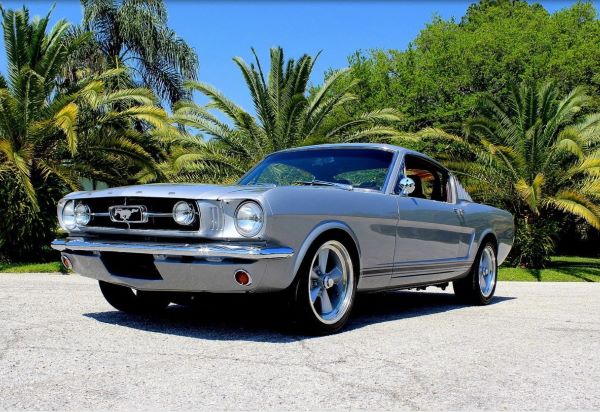
Ford Mustang 1965
This is a style issue. I would understand if American’s replaced a mark 1 Mustang with a C2 Corvette, but for me the fastback version always had that bit more style.
The engine needs to be the V8, but either a small block or big block. Neither handled particularly well, but the noise could be great.
It may have been Steve McQueen smoking tyres in Bullit that did it for me. The car continues to be cool.
The list is the personal preference of our Director, Guy Winter. A car fanatic since the 1960’s, he eats’, sleeps and dreams everything Motor Trade. For the past 25 years he has worked for Cymark providing digital and telephone marketing support for individual retailers, groups and manufacturers alike.
If you want to stay on top of the latest Motor Trade chat either subscribe to this blog or find Guy on Linkedin.
A combination of style, ‘coolness’, driving pleasure and sheer personal preference. If you have a better list or just one model you want to add the list, let me know.
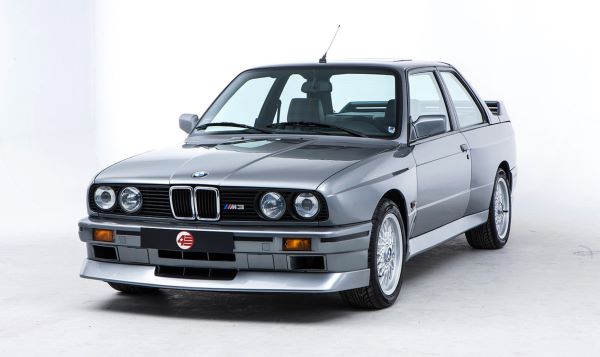
BMW M3 Evolution II
Again, an early model gets the vote not the latest V8 turbo charged barge. The #M3 Evolution II model, featuring Audi Quattro esq flared arches wins gets my vote.
Such a pleasure to drive, sure, it didn’t stick to every road surface like the Audi, but there was real pleasure to be had taking it to my own meagre limits. It I were to drive the same way, in the latest version, I would end up running out of road.
An M3 built for the road driver not the race track.
The list is the personal preference of our Director, Guy Winter. A car fanatic since the 1960’s, he eats’, sleeps and dreams everything Motor Trade. For the past 25 years he has worked for Cymark providing digital and telephone marketing support for individual retailers, groups and manufacturers alike.
If you want to stay on top of the latest Motor Trade chat either subscribe to this blog or find Guy on Linkedin.
A combination of style, ‘coolness’, driving pleasure and sheer personal preference. If you have a better list or just one model you want to add the list, let me know.
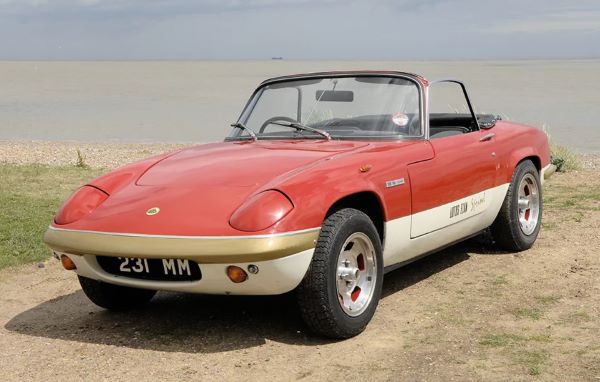
Lotus Elan
The original. Copied by so many since its launch in 1964. But I’m not looking at the original 1500 model, my eyes are focused on the 1971 final rendition Sprint version.
Still using the original Ford engine this little rocket only produced 125bhp. But could get to 60mph in around 6.5 seconds. Mainly due to its meagre weight of 1,500lbs.
Not a car for the American market, where the Corvette of the day (C2) dwarfed it with power and top speed. But it did weighed twice as much at more than 3,300lbs. The little Elan was near uncatchable on a twisty road.
The list is the personal preference of our Director, Guy Winter. A car fanatic since the 1960’s, he eats’, sleeps and dreams everything Motor Trade. For the past 25 years he has worked for Cymark providing digital and telephone marketing support for individual retailers, groups and manufacturers alike.
If you want to stay on top of the latest Motor Trade chat either subscribe to this blog or find Guy on Linkedin.
In the car world, I think, we would like to know what stock we should be carrying into Qtr1.
In addition to retailers reducing the levels of very expensive stock on the books we also have the dilemma of petrol, diesel or electric and hybrid.
The #BEV and #PHEV models have been looking very unattractive, mainly because retailers were blowing thousands of pounds on the part exchanges they took in. You don’t want to be caught with a £4,000 loss per car.
And the customers know this. It took a few months, but buyers cottoned on to the fact that the electric cars they could smugly show the neighbours are now, potentially, a bit of a disaster area for residual values. At least they purchased the car on PCP with fixed balloon payments.
So no problem them. Well, someone has got to pay and I’m sure the finance houses will keep their rates high long enough to clear any debt. Which might slow the start of 2024.
So what about January and Quarter 1?
We are urging retailers to get their plans in early, our call centre is filling up with fast start events from retailers looking to get 2024 off to a flying start. The hope is that manufacturers come on board with continued deposit contribution offers.
If you have pencilled in either new or used car events for January and February give us a call so we can reserve your campaign a calling slot. Don’t leave it too late like many dealerships did in 2023.
Following on from my earlier article, ‘The Rise and Fall of Used Car Sales’ , I’ve been doing a little digging while on my business trip to America.
You may remember, I questioned the difference in the conversion rates sales executives were seeing in America compared with the UK. American trade articles and websites were telling me that 50%-60% of customer enquiries are buying, continuing to be the norm, and everything was rolling along GREAT.
To see for myself, if it really was that much better than the UK – where 20%-25% is the accepted norm – I tried a little experiment.
The mystery shop.
To call it a mystery shop would be misleading. I was actually looking to buy an SUV, I just visited a lot more dealerships than I would normally.
Out of all of them, only 12.5% actually asked me for my contact details. That’s one in 8.
Now the US advertised conversion rate percentage makes sense. If a sales exec is only going to record the name of a customer if they are waving a credit card under their nose, then a 50%-60% conversion makes sense.
But what about all those ‘potential’ customers? ‘Me’ for example. I’m still sat here looking to buy a mid-range SUV, and the phone has only rang once.
The only dealership to ask for my contact number and email address AND actually send me something immediately and follow that up by telephone 24hrs later was the Kia Dealership in St Petersburg.
I will say, all of the staff, in all of the dealerships – with the noticeable exception of BMW – were very polite and professional. They provided all of the information I needed and it was a pleasurable experience.
But I have no idea why the other, 7/8, dealerships didn’t ask for my number allowing them to call me.
Maybe its fear around GDPR and data protection in America. But as I had walked into the showroom, sat in their cars and said ‘I WANT TO BUY A CAR’, I think that covers future contact under legitimate interest.
So it looks like the USA or rather 87.5% of US car dealerships, actually have a 20% conversion rate. They just, collectively, dropped the ball by not asking all of the customers that walk through the door for their telephone numbers.
I was surprised. Disappointed. But surprised for sure.
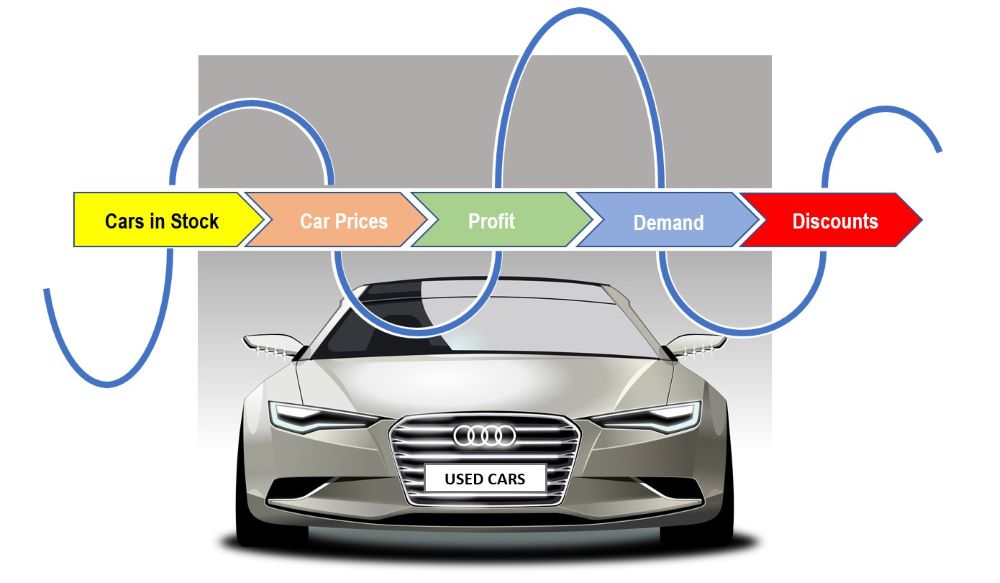
The fluctuation in both demand and used car prices continues its meteoric rise and ‘off a cliff’ fall though Qtr4.
Looking back through various trade articles issued in 2023, this is certainly nothing new. It’s just that previously there was quite an overlap between demand, availability and profit per unit that retailers were able to hold onto.
But is this a return to Qtr4 figures of old?
Mixed opinions, 2/3 of retailers are saying this is what we have always experienced and only a 1/3 saying the problems are due to retailers are now expecting car sales profits to continue month in, month out through the whole year.
Its not surprising that Manheim reported that conversion rates were falling, the ratio dropping a 1/5th on the same period in 2019.
We can however, report that our retailers are seeing a healthy increase in enquiry levels – hugely in the case of used cars from monthly figures over the past 4 years.
And, their conversion rates are holding up strong, but then they are using our enquiry follow-up / lost sale programmes so it is a little difficult to predict how other retailers are fairing.
If you’re conversion rates are not what you’re expecting it then it might be worth trying a sample batch of calls with Cymark. At least you would get a true picture of what your customers are saying.
Back in the market, particularly the UK, the reluctance to take anything electrical in part exchange continues – unless you have an outlet for the car – as their prices continue to fall heavily week to week.
Traditionally stock of the expensive models has always been run down over the winter months, just so you didn’t have to write them down. I think that is still continuing, it’s just that the number of cars that now fall into that ‘expensive model’ category has risen so much.
“Don’t get caught with it”, still prevails.
US / UK Conversion rates.
I was interested, while here in America, that US retailers expect a 50%-60% conversion rate, while in the UK, 25% is the more generally accepted average. It does make me wonder if either the customers are a lot more switched on and margins are lower in the States or – which is my probable leaning – the UK retailers are much better at getting contact details for ‘any customer that enquired’.
All I can say is, out of all the car buying customers I know in America, very few have ever had a follow up call or DM piece relating to a similar car they enquired about 2 months ago (or 6 months or 2 years!).
If you want a little more information about conversion rates and how to keep them strong. Drop me a message below and subscribe to the blog or Cymark on social media.
I’m currently on my bi-annual work trip to America and wanted to bring you first hand news of current dealerships impression from this side of the Atlantic.
As in the UK, manufacturers are still hyping up the benefits of going electric, but US retailers are confirming that the buying public just isn’t behind it.
First adopters in urban homes, where location permits, are running two ‘main’ cars having an extra model on the driveway, a petrol for the longer trips and an electric for the commute.
A huge difference in incentive – Over here there seems to be a real mixed bag covering what drivers can get charged for –
Purchase Tax on the car varies state to state and can be as little as 0% right up to 7% of the cars value. Obviously if you live near one of those 0% state borders, it is probably worth making a weekend of it and driving some distance to pick up the car.
Emission Tax? well, no. Not really. There is a gas guzzler tax aimed at the economy of the car itself but not the amount of CO2 that comes out. This is apparently changing in the future, but many owners are sceptical.
MOT. Again, it varies State to State, but even the states that do have a vehicle test, that test is mainly limited to the time the car is sold from a retailer and isn’t comparable to the UK test. For the rest of the States it is definitely buyer beware.
As one owner put it. “Why do I need to buy electric if no one is checking? Sure, I want to help save the planet, but not at that cost.”
This is echoing the message we are hearing back in the UK through our enquiry follow up calls.
The calls are designed to improve the conversion rate of all the enquiries that land at a retailer, which it most certainly does, but the – ‘reason for not purchasing your car’ – response is very enlightening.
The number of customers that don’t really like the hands off, on-line only option is very high in the UK, outside of those customers that will always choose the latest thing, and its the same in America. A lot of disbelief that it will work at all, despite Hyundai ramping up their plans to sell new cars through Amazon.
More and more customers are waiting to see what the future is bringing, some very cheap Asian cars, hydrogen or yet another change in the rules. If Ford America can pull back from building a new electric battery factory in Europe, “there must be something in it”, is their reasoning.
The resale value of EV’s after 7 years is worrying many customers, driving down the used car value and PX prices. Some of the depreciation reported is frightening potential buyers.
One both sides of the pond. We really need to keep an eye on what customers are thinking. Sure, to sell more cars, but also to get a better idea of what our customers are really thinking.